
1. Busuu vs Babbel
The Busuu vs Babbel choice depends on which features matter to you the most. For those who want speech recognition technology for instant pronunciation feedback, a lifetime subscription option, podcasts, and vocabulary games to reinforce learning, Babbel is the way to go.
If you want real people correcting what you write or say (not just auto-marking), Busuu offers you that. This is how it works. You record yourself answering a short prompt. You submit it to Busuu community such that native speakers can correct it. You can also submit your writing exercise to the community.
Arabic, Japanese, Korean, and Chinese are only available with Busuu (not Babbel). Before you sign up to either platforms, there are limitations you need to be aware of. So, keep reading.
I needed Spanish before my trip to Spain. My vocabulary was basic so I decided to buy both subscriptions and use them daily for over four months.
This Busuu vs Babbel comparison contains everything I discovered during those four months and other real user experience. The two apps align their content with the Common European Framework of Reference, which means the levels (A1 through C1) follow a standardised system recognised across Europe.
2. What is Busuu?
Busuu was founded in Madrid in 2008 and now operates from London. Chegg, an American education technology company, acquired it in January 2022. The platform takes its name from Busuu, an endangered language spoken in Cameroon by fewer than ten people. This naming choice reflects an awareness of why language preservation matters.
The platform claims over 120 million registered users across 190 countries. Busuu offers courses in 14 languages, including Spanish, French, German, and the Asian languages that Babbel avoids entirely.
Busuu courses map onto CEFR levels from A1 (beginner) up to B2 (upper-intermediate), with Spanish and English extending to C1 (advanced). The curriculum includes vocabulary drills, grammar explanations, dialogues, and speaking tasks.
The platform's distinguishing feature is its community feedback system. When you finish a lesson, Busuu invites you to record yourself speaking a phrase or write a short response. Your recording then goes out to native speakers worldwide who can listen and offer corrections. These correctors are not teachers; they are regular users. The feedback quality varies considerably. Sometimes I received detailed suggestions within thirty minutes. Other times I waited a full day for nothing more than a thumbs-up emoji.
The system works in both directions. You can browse the Discover tab and correct exercises from people learning English (or whatever your native language happens to be), which earns you points on the leaderboard. Some users take their correcting duties seriously. Others are clearly clicking through to farm points without seriously listening to your recording.
3. What is Babbel?
Babbel launched from Berlin in 2007, making it one year older than Busuu. The company name comes from the Dutch word "babellen," which means to chat. Over 200 linguists built its courses, and the platform currently teaches 14 languages with a focus on European and major world languages.
The platform recently earned recognition on the GSV 150 list, placing it among the top 150 companies shaping global education. This recognition reflects Babbel's track record rather than mere marketing claims.
What distinguishes Babbel is its approach to teaching grammar. The platform tailors explanations to your native language, so an English speaker learning Spanish receives different breakdowns than a German speaker tackling the same lesson. The app assumes you are an adult with existing linguistic knowledge and builds upon that foundation. Speech recognition technology provides pronunciation feedback immediately, without the wait times that come with Busuu's community model.
4. Teaching approach
The teaching methodology represents one of the most significant differences in the Busuu vs Babbel comparison. Understanding these differences will help you select the platform that matches how your brain actually processes new information.
4.1 Lesson structure
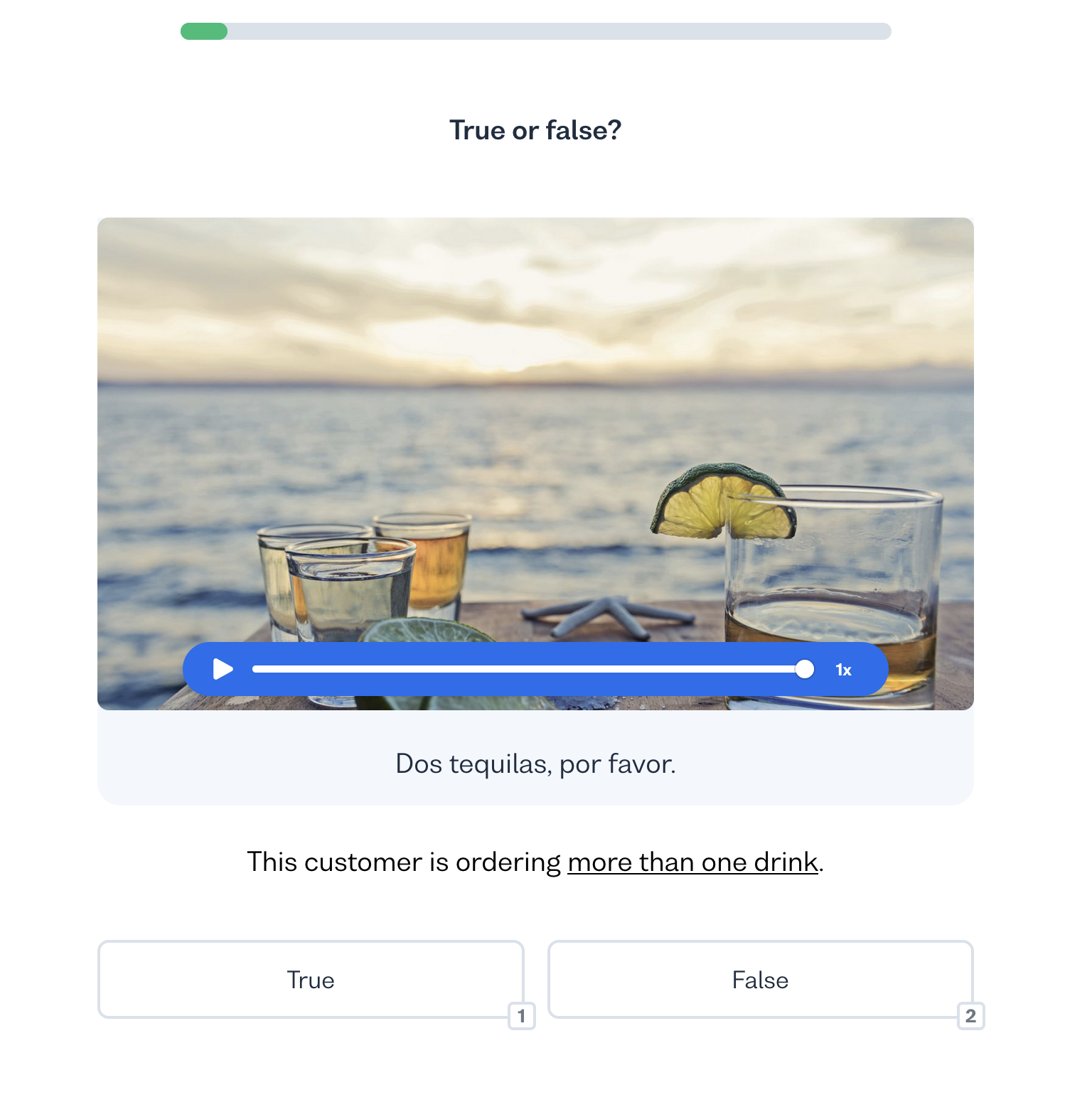
Busuu: Lessons follow a structured path aligned with CEFR levels. Each unit covers specific topics through vocabulary exercises, dialogues, grammar snippets, and speaking tasks. The feature I appreciated most was the inclusion of video clips featuring real fluent speakers (see the screenshot below). The lessons typically last 10 to 20 minutes depending on the unit complexity.
Babbel: The lesson last around 5 to 15 minutes each. The app does not include the video of the speakers. Instead, it relies on images, text, and audio recordings. Babbel's teaching philosophy emphasises repetition; you practise the same material through different exercise types until it sticks in your memory. The scenarios cover practical situations like asking for directions.
4.2 Speaking practice
Busuu: You record yourself speaking and then wait. Native speakers somewhere on the planet might listen and offer feedback, or they might not bother. The corrections I received varied wildly in quality. One user dissected my vowel sounds with genuine care. Another gave me five stars without any comment. A third corrected things that were not actually wrong, which created confusion. The human element adds authenticity but introduces unpredictability you cannot control.
Babbel: Speech recognition technology fires back instantly. The algorithm compares your pronunciation against native speaker models and flags areas where you went astray. Babbel recently added "Babbel Speak," an AI-guided trainer for low-pressure speaking practice. The feedback arrives consistently and quickly, though it lacks the nuance that a human ear might catch.
4.3 Grammar instruction
Busuu: Grammar explanations exist but do not dominate the learning experience. The platform introduces rules through context and examples rather than detailed theoretical explanations. Premium subscribers get access to dedicated grammar review sections. Overall, Busuu favours a communicative approach where you absorb patterns through repeated exposure rather than explicit instruction.
Babbel: Grammar sits at the centre of Babbel's teaching philosophy. The platform provides explicit explanations in your native language, helping you understand why sentences work the way they do. Grammar tips appear throughout lessons, and the repetition-heavy approach reinforces concepts until they feel automatic. If you want rules spelled out clearly, Babbel delivers that experience.
4.4 Vocabulary building
Busuu: New words appear in context within dialogues and example sentences. Each vocabulary item includes voice recordings from native speakers. Premium users can download vocabulary lists as PDFs for offline study. The AI-powered review assigns strength ratings to each word based on your quiz performance and prioritises terms you keep getting wrong.
Babbel: Vocabulary lessons use images and illustrations to convey meaning before gradually transitioning to full sentences. The spaced repetition system (called Review Manager) resurfaces words at calculated intervals designed for memory retention. Review sessions offer flexibility in format: flashcards, listening exercises, speaking practice, or a mixed approach.
4.5 Review tools and repetition
Busuu: The Smart Review feature gathers all grammar and vocabulary from completed lessons into one location. You can review at your own pace, with the system highlighting areas that need more practice based on your performance history.
Babbel: Before launching new content, the app prompts quick reviews covering previous material. You can choose your practice format, which lets you target specific weaknesses (listening, writing, speaking) rather than following a fixed review path.
5. Feature breakdown
Beyond core lessons, both platforms bundle additional tools to support your learning. Here is how Busuu vs Babbel compare on key features.
5.1 Community and social learning
Busuu: The community feature is what makes Busuu distinctive. You submit writing and speaking exercises for correction by native speakers worldwide. In return, you help others learning your native language. The Discover tab shows exercises from other learners waiting for feedback.
I should be honest about my experience with this community feature. Some corrections were genuinely useful, with correctors taking real time to explain my errors. But other times I received nothing more than a star rating and a quick thumbs up. The worst experiences came when I got contradictory corrections from different users. Since these correctors are volunteers rather than trained teachers, you need to treat their feedback with appropriate caution.
Babbel: Babbel does not offer community features or native speaker feedback. Learning stays between you and the app. Some learners find this isolating. Others prefer not having to rely on strangers of unknown skill level.
5.2 Offline access
Busuu: Premium subscribers can download lessons for offline study on mobile devices. This includes full lessons, not just vocabulary lists. The feature proves useful for commuters or travellers without reliable internet access.
Babbel: The app allows downloading lessons for offline use. You can study vocabulary, complete exercises, and review material without an internet connection. Progress syncs automatically when you reconnect.
5.3 Progress tracking and goals
Busuu: The platform provides detailed progress reports showing completed lessons, vocabulary strength, and grammar topics mastered. The Study Plan feature lets you set goals based on available time and target completion dates. Daily streaks and leaderboards add competitive pressure if that type of motivation works for you.
Babbel: Progress tracking shows your position within each course and overall completion percentage. The app tracks daily streaks and study time but offers less detail about specific skill areas compared to Busuu's reporting system.
5.4 Live lessons and tutoring
Busuu: Busuu Live offers personal tutoring sessions with certified teachers as an add-on to Premium subscriptions. These live classes let you practise speaking with real instructors who provide immediate feedback. This feature costs extra beyond the standard subscription price.
Babbel: Babbel Live provides 60-minute group classes with professional teachers across hundreds of topics. Classes cover practical scenarios like ordering in a coffee shop, discussing travel plans, or business communication. This feature comes included with Babbel Live subscriptions and represents one of Babbel's strongest offerings for serious learners.
5.5 Certificates and credentials
Busuu: Premium users can earn official CEFR certificates through Busuu's partnership with McGraw-Hill Education for certain languages. These certificates provide formal recognition of language ability that you can share with employers or educational institutions.
Babbel: Babbel provides completion certificates for finished courses but does not offer externally validated CEFR certification. The certificates serve as personal achievement markers rather than credentials recognised by outside institutions.
6. Languages available
Both platforms offer 14 languages each, though the specific languages differ in important ways.
| Language | Busuu | Babbel |
|---|---|---|
| Spanish | ✓ | ✓ |
| French | ✓ | ✓ |
| German | ✓ | ✓ |
| Italian | ✓ | ✓ |
| Portuguese | ✓ (Brazilian) | ✓ (Brazilian) |
| Russian | ✓ | ✓ |
| Polish | ✓ | ✓ |
| Turkish | ✓ | ✓ |
| Dutch | ✓ | ✓ |
| Japanese | ✓ | ✗ |
| Chinese | ✓ | ✗ |
| Korean | ✓ | ✗ |
| Arabic | ✓ | ✗ |
| English | ✓ | ✓ |
| Danish | ✗ | ✓ |
| Swedish | ✗ | ✓ |
| Norwegian | ✗ | ✓ |
| Indonesian | ✗ | ✓ |
The key split: Busuu offers Asian languages (Japanese, Chinese, Korean) and Arabic that Babbel does not touch. Some reviewers have noted that Busuu's Asian language courses, particularly Chinese, may be lower quality than their European language offerings. Babbel avoids Asian languages entirely, concentrating only on languages where they feel confident in course quality. Whether this reflects wisdom or limitation depends on what you want to learn.
7. Cost breakdown
Pricing structures differ between the two platforms. Both offer monthly rates that drop significantly if you commit to longer subscription terms.
Busuu pricing
| Plan | Monthly cost | Total billed |
|---|---|---|
| 1 month | $10.50 - $13.99 | $10.50 - $13.99 |
| 6 months | ~$8.45 | ~$50.70 |
| 12 months | $5.25 - $6.95 | $62.99 - $83.40 |
| 24 months | ~$5.41 | ~$130 |
Babbel pricing
| Plan | Monthly cost | Total billed |
|---|---|---|
| 1 month | $13.95 - $17.95 | $13.95 - $17.95 |
| 3 months | $9.95 | $29.85 |
| 6 months | $8.45 | $50.70 |
| 12 months | $6.95 - $8.95 | $83.40 - $107.40 |
| Lifetime | One-time | $169 - $299 (all languages) |
Worth noting: Prices shift by region and promotional timing. Purchasing directly through the websites rather than app stores can save you up to 30% in platform fees. Black Friday, New Year, and back-to-school periods routinely bring discounts of 30-60% off regular prices. Waiting for a sale can save you real money.
8. Subscription details
The fine print matters when you are committing money. Here is what each platform buries in their terms and conditions.
8.1 Free options
Busuu: The platform offers a genuinely functional free tier. You can access core lessons (with adverts), participate in the community, and test the platform before spending any money. Premium features like grammar units, offline mode, and certificates remain locked behind the paywall.
Babbel: The free offering is stingy by comparison. Only the first lesson in each course is available without payment. There is no ongoing free version. Some promotions include 7-day trials with full access, but you must enter payment information upfront.
8.2 Refund guarantee
Busuu: The platform offers a 14-day money-back guarantee from the date of Premium purchase. You need to email [email protected] with your payment details within that deadline. Support staff generally respond helpfully to refund requests.
Babbel: Babbel provides a 20-day money-back guarantee with no questions asked. This longer window gives you more time to evaluate whether the platform actually works for your learning style.
8.3 Cancellation process
Busuu: Subscriptions auto-renew unless you cancel them. You can cancel through your account settings or by contacting support directly. Access continues until the end of your paid period. Note that cancelling through app store settings sometimes fails to work properly; you may need to contact Busuu directly if problems arise.
Babbel: Navigate to Profile & Settings, then Account Information, then Cancel Renewals. If you subscribed through Google Play or the App Store, you must cancel through those platforms instead. Your access continues until the subscription period expires.
8.4 Lifetime access
Busuu: The platform does not offer a lifetime subscription option. You must maintain active subscriptions for continued access to premium features.
Babbel: The lifetime subscription covers all 14 languages forever with a single payment. The regular price sits around $299, but promotional pricing frequently drops to $169-200 during sales. For committed learners interested in multiple languages over time, this represents excellent value.
8.5 Student discounts
Busuu: Students receive 20% off Premium plans with verification of student status.
Babbel: College students save 65% on three-month subscriptions, bringing the total to around $15.99. Veterans, military members, educators, and healthcare workers can receive six months for $36, which represents a 60% discount.
8.6 Business and team options
Busuu: Busuu for Business provides enterprise solutions with custom pricing, team progress tracking, and content tailored to business language needs. The platform integrates with Microsoft Teams for workplace learning.
Babbel: Babbel for Business offers corporate language training with user management, progress tracking, and live classes. Pricing is customised based on organisation size and specific needs.
9. Platforms and compatibility
Both platforms work across multiple devices with no significant differences.
| Feature | Busuu | Babbel |
|---|---|---|
| iOS app | ✓ | ✓ |
| Android app | ✓ | ✓ |
| Web browser | ✓ | ✓ |
| Offline mode | ✓ (Premium) | ✓ |
| Progress sync | ✓ | ✓ |
| Multiple devices | Unlimited | Unlimited |
10. User reviews and ratings
What actual users report tells you more than marketing claims ever could.
| Platform | Trustpilot | App Store | Google Play |
|---|---|---|---|
| Busuu | 4.6/5 (17,000+ reviews) | 4.7/5 (60,000+ ratings) | 4.5/5 (390,000+ reviews) |
| Babbel | 4.4/5 (30,000+ reviews) | 4.6/5 | 4.5/5 |
According to reviews on Trustpilot, Busuu users praise the feedback feature, grammar explanations, structured CEFR-aligned curriculum, and responsive customer service. The most common complaints concern auto-renewal difficulties and occasional app glitches.
Babbel earns praise for its learning variety, clear grammar instruction, and practical conversational content. Users particularly appreciate the podcasts, review features, and how lessons fit into daily schedules. Complaints typically centre on auto-renewal policies and requests for more advanced content.
11. Customer support and reliability
Busuu support
Busuu's Customer Satisfaction team responds via email ([email protected]), web form, and live chat seven days per week. The company aims to respond within 24 hours. Trustpilot reviews frequently mention individual support agents by name with positive comments. The company actively responds to reviews on Trustpilot, which suggests genuine engagement with customer feedback.
Babbel support
You can contact Babbel support at [email protected]. The company responds to Trustpilot reviews with helpful suggestions and escalates issues when appropriate. Response times are generally reasonable, though some users report delays during peak periods.
Company stability
Busuu: Chegg, a publicly traded educational technology company, acquired Busuu in 2022. This acquisition provides financial backing and stability. The platform has operated since 2008 with over 120 million registered users.
Babbel: Babbel remains an independent company operating since 2007 with millions of subscribers worldwide. The company was named among the top 150 companies impacting global education. This long track record suggests consistent service.
12. Which platform fits your needs?
- Want native speakers to correct your writing and speaking attempts
- Are learning Japanese, Chinese, Korean, or Arabic
- Prefer social learning with community interaction
- Want CEFR-certified credentials from McGraw-Hill
- Appreciate video content showing actual speakers
- Need a usable free version before committing money
- Value detailed progress tracking with specific targets
- Want grammar rules explained clearly in your native language
- Prefer instant and consistent pronunciation feedback
- Are learning Danish, Swedish, Norwegian, or Indonesian
- Want a lifetime subscription option for long-term learning
- Prefer independent study without social features
- Value live group classes with professional teachers
- Want flexible review options that let you choose your practice format
- Appreciate podcasts and varied learning formats
13. Real-world scenarios
Scenario 1: Preparing for a trip to Spain
Winner: Tie
Both platforms deliver quality Spanish courses with practical travel content. Busuu connects you with native speakers from different Spanish-speaking regions, exposing you to varied accents. Babbel drills practical phrases for real situations like ordering food and asking directions. Either platform works well for travel preparation.
Scenario 2: Learning Japanese from zero
Winner: Busuu
Babbel does not offer Japanese at all. Busuu provides courses covering hiragana, katakana, and kanji, with specialised content including a manga-focused course. The community feature connects you with Japanese native speakers for authentic feedback on your attempts.
Scenario 3: Business German for career advancement
Winner: Babbel
Babbel's grammar-heavy approach suits professional contexts where accuracy matters. The platform offers Business courses in major languages. Babbel Live provides classes focused specifically on workplace communication scenarios.
Scenario 4: Learning multiple languages over many years
Winner: Babbel
Babbel's lifetime subscription ($169-299 during sales) covers all 14 languages forever with a single payment. For dedicated polyglots, this one-time purchase delivers exceptional value compared to maintaining ongoing subscriptions.
Scenario 5: Wanting accountability and social motivation
Winner: Busuu
Busuu's community creates accountability through social interaction. Knowing real people will see and correct your work can motivate consistent practice. The give-and-take of helping others while receiving help builds engagement that purely self-study apps cannot match.
14. Final verdict
| Category | Weight | Busuu | Babbel |
|---|---|---|---|
| Learning effectiveness | 25% | 8/10 | 8/10 |
| Grammar instruction | 15% | 7/10 | 9/10 |
| Speaking practice | 15% | 8/10 | 7/10 |
| Language variety | 10% | 9/10 | 7/10 |
| Value for money | 15% | 8/10 | 8/10 |
| Unique features | 10% | 9/10 | 7/10 |
| Customer support | 10% | 8/10 | 8/10 |
| Weighted total | 100% | 8.05/10 | 7.90/10 |
15. Conclusion
I spent four months testing both apps and completed roughly 240 lessons between them. The experience taught me that neither platform is objectively better than the other. They serve different learning styles and scratch different itches.
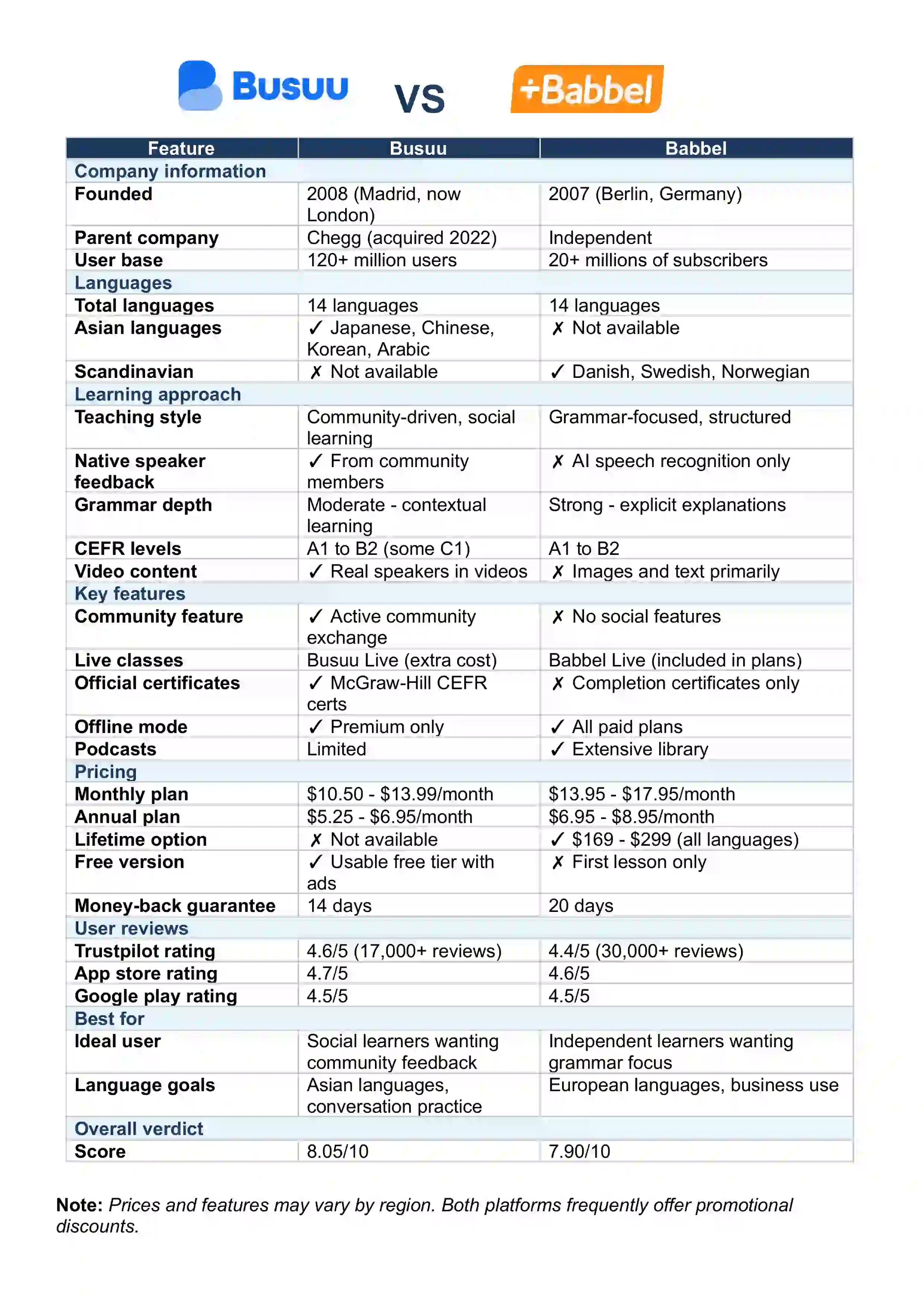
If you crave human feedback and community interaction, Busuu delivers something algorithms cannot replicate. Native speakers correcting your attempts adds authenticity that pure AI feedback lacks. If you want to learn Asian languages or Arabic, Busuu is your only choice between these two options. The McGraw-Hill CEFR certificates carry weight if credentials matter for your career or studies.
If you prefer structured independence with grammar rules spelled out, instant pronunciation feedback, and no reliance on strangers, Babbel wins. Scandinavian languages exist only on Babbel. The lifetime subscription makes financial sense for long-term learners.
Before my flight to Spain, I had finished the A2 levels on both platforms. Could I hold a real conversation? Barely. Did I embarrass myself less than if I had done nothing? Considerably. Babbel taught me why sentences worked the way they did. Busuu gave me the nerve to speak aloud, knowing strangers might listen and judge. The combination suited my learning style. I have also written a comparison between Babbel and Rosetta Stone if that pairing interests you.